Thể loại
Blog mới
Máy khắc laser Youngpool: Giải pháp SMT tích hợp cho việc khắc và kiểm tra.
Apr 11, 2026
Khi công nghệ sản xuất SMT tiếp tục phát triển hướng tới độ tin cậy cao hơn và quản lý tinh gọn hơn, việc khắc dấu trên PCB đã tiến bộ từ một phương tiện truyền tải thông tin đơn giản thành một phương tiện truyền tải dữ liệu quan trọng cho việc truy xuất nguồn gốc chất lượng và kiểm soát quy trình. Về mặt quy trình, việc khắc dấu bằng laser hoạt động bằng cách chiếu năng lượng laser lên bề mặt vật liệu, gây ra những thay đổi vật lý hoặc hóa học để tạo ra các dấu hiệu có thể nhận dạng được. Trong bối cảnh này, một dấu hiệu không chỉ cần phải
“
đã áp dụng
"
nhưng cũng là
“
có thể đọc được một cách đáng tin cậy,
"
Điều này thúc đẩy nhu cầu thực tiễn về khả năng kiểm tra trực tuyến.
Trong bối cảnh ngành công nghiệp này, Youngpool đã kết hợp
“
đánh dấu và đọc
"
chức năng như một cấu hình chính trong đó
Dòng M-900
máy khắc laser
Được trang bị hệ thống thị giác camera kép, máy thực hiện nhận dạng và xác minh mã vạch ngay sau khi khắc laser, cho phép hoàn thành việc khắc và kiểm tra trong cùng một trạm. Thiết kế này cho phép xác minh chất lượng khắc trong thời gian thực trong quá trình xử lý, giảm nguy cơ phát hiện lỗi chậm trễ so với các phương pháp lấy mẫu ngoại tuyến truyền thống.
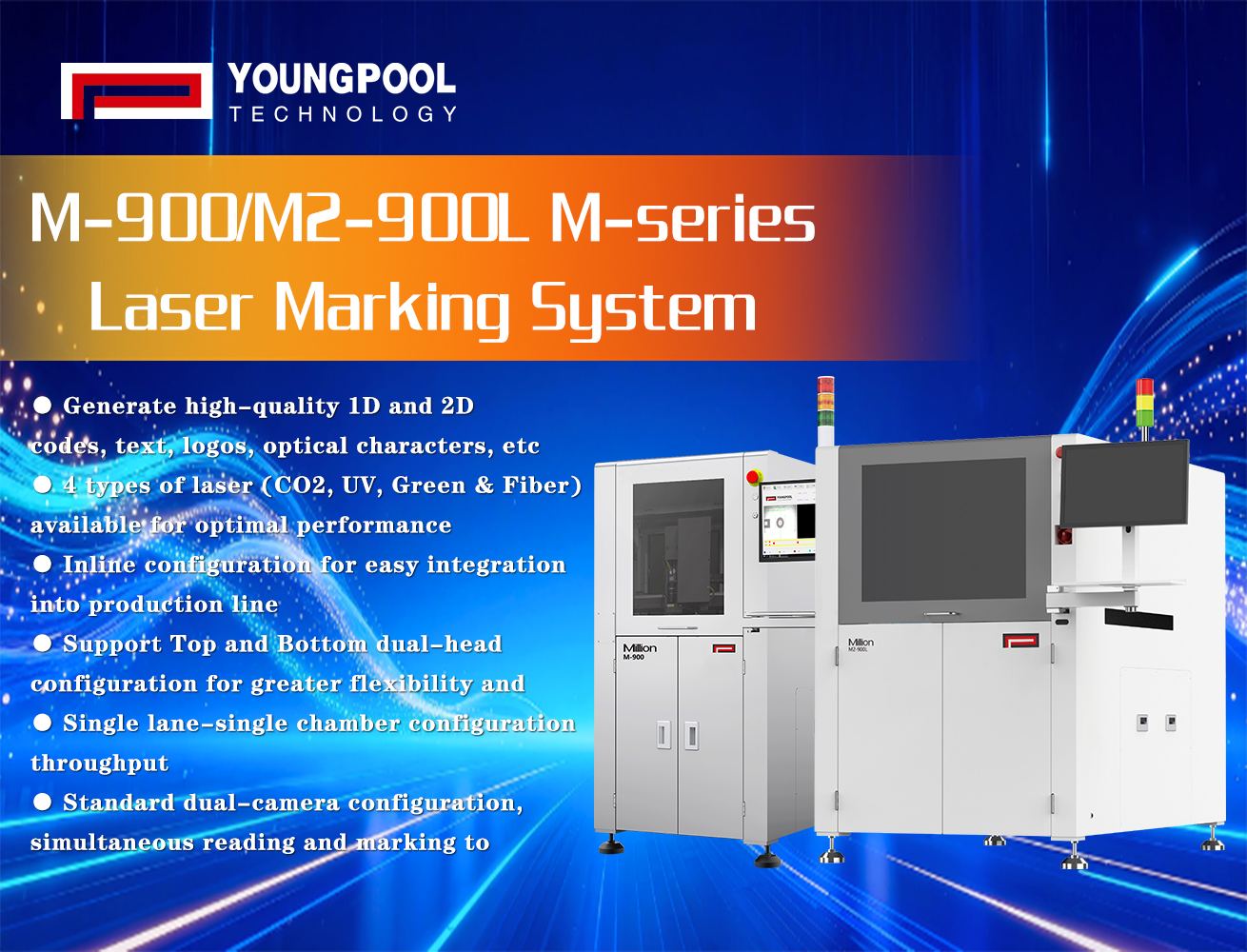
Từ góc độ hệ thống, khả năng này thiết lập quy trình kiểm tra nội tuyến của...
“
đánh dấu
–
sự công nhận
–
Xác minh.
"
Khi được tích hợp với hệ thống dây chuyền sản xuất, nó còn cho phép ghi dữ liệu và truy xuất nguồn gốc, tạo nền tảng cho việc phân tích chất lượng tiếp theo. Trong công nghệ hiện đại
Dây chuyền SMT
Thông thường, thiết bị khắc laser có khả năng kết nối với hệ thống MES để truyền và quản lý dữ liệu theo thời gian thực. Trên cơ sở đó, chức năng khắc và đọc không chỉ đóng vai trò là phương pháp kiểm tra mà còn là nút thu thập dữ liệu.
Trong các ứng dụng thực tế, khả năng kiểm tra trực tuyến như vậy đặc biệt có giá trị đối với môi trường sản xuất đa dạng sản phẩm, số lượng nhỏ. Sự khác biệt về vật liệu, độ hoàn thiện bề mặt và nội dung đánh dấu giữa các sản phẩm khác nhau có thể ảnh hưởng trực tiếp đến độ tương phản và khả năng đọc của dấu. Với việc kiểm tra ở cấp độ bo mạch, khả năng đọc của từng PCB có thể được xác minh ngay sau khi gia công, do đó giảm thiểu rủi ro liên quan đến các lỗi ở cấp độ lô hàng. Sự chuyển đổi từ kiểm tra lấy mẫu sang xác minh trực tuyến giúp cải thiện tính ổn định tổng thể của kiểm soát chất lượng.
Cần lưu ý rằng khả năng đọc được dấu khắc không chỉ phụ thuộc vào hệ thống thị giác mà còn phụ thuộc vào chất lượng của quá trình khắc laser. Thiết bị hỗ trợ nhiều cấu hình nguồn laser, bao gồm cả CO₂.
₂
Các loại laser UV, laser xanh lá cây và laser sợi quang được sử dụng để phù hợp với các đặc tính vật liệu khác nhau và đạt được độ tương phản đánh dấu tối ưu cũng như độ nét của cạnh. Kết hợp với hệ thống nhận dạng CCD ổn định, điều này cho phép hiệu suất đọc nhất quán. Thiết kế phối hợp như vậy giữa các loại laser này thể hiện sự khác biệt về đặc tính vật liệu và độ tương phản đánh dấu tối ưu cũng như độ nét của cạnh. Kết hợp với hệ thống nhận dạng CCD ổn định, điều này cho phép hiệu suất đọc nhất quán. Thiết kế phối hợp như vậy giữa các laser này thể hiện sự khác biệt về đặc tính vật liệu và độ tương phản đánh dấu tối ưu cũng như độ nét của cạnh.
đánh dấu
Khả năng đảm bảo chất lượng và nhận diện sản phẩm phù hợp hơn với yêu cầu sản xuất thực tế.
Nhìn chung, chức năng đánh dấu và đọc không phải là một tính năng riêng lẻ, mà là một nút quan trọng kết nối cả quá trình xử lý và kiểm tra. Bằng cách tích hợp hệ thống nhận dạng hình ảnh vào thiết bị,
Công nghệ Youngpool
Cho phép xác minh trực tuyến quy trình đánh dấu mà không ảnh hưởng đến thời gian chu kỳ dây chuyền, mang lại phương pháp ổn định hơn để kiểm soát chất lượng đánh dấu. Triết lý thiết kế này
—
mở rộng từ việc thực thi quy trình đến việc xác minh quy trình
—
Điều này càng làm nổi bật giá trị của thiết bị khắc laser trong các dây chuyền sản xuất SMT hiện đại.
Email: shicx@youngpool.com
Điện thoại: +86 181 2417 2940


 Mạng IPv6 được hỗ trợ